You’re considering waterproofing your basement, but you’re not sure if it’s worth the investment. On one hand, a dry, usable basement sounds appealing, but on the other, the costs seem steep. What if the expense could be justified by a significant increase in your home’s value? Various studies suggest that a waterproofed basement can boost your property’s marketability and overall worth. But how accurate is this claim? Let’s explore this further to help you make an informed decision.
Key Takeaways
- Basement waterproofing can significantly boost a property’s value by adding functional square footage.
- Potential buyers view a waterproofed basement as versatile extra space, enhancing the home’s marketability.
- Waterproofing reflects proactive maintenance by homeowners, increasing buyer appeal and decreasing fears of future damage.
- Despite initial costs, waterproofing can yield a significant return on investment, reaching up to 30%.
- Real-life examples show that basement waterproofing has increased property values by 10-20%.
Understanding Basement Waterproofing
Understanding basement waterproofing is key to maintaining the longevity and value of your home.
It’s a process that’s more complex than you might initially think, and it’s important to get a grip on the basics.
It’s not just about applying a sealant to your walls; there’s much more to it.
Firstly, you’ll need to identify the source of the moisture.
This could be a leaky pipe, condensation, or even groundwater seeping in from outside.
Once you’ve identified the source, you can start to address the problem.
There are two main types of waterproofing: interior and exterior.
Interior waterproofing is often a cheaper, quicker solution that involves applying a waterproof coating to the interior walls of the basement.
However, this doesn’t address the root cause of the issue – the moisture coming in from outside.
Exterior waterproofing, on the other hand, involves excavating around the outside of the house to apply a waterproof barrier to the exterior walls.
This is a more thorough and long-lasting solution, but it’s also more expensive and disruptive.
Understanding these aspects of basement waterproofing will help you make an informed decision about what’s best for your home.
The Impact on Property Value
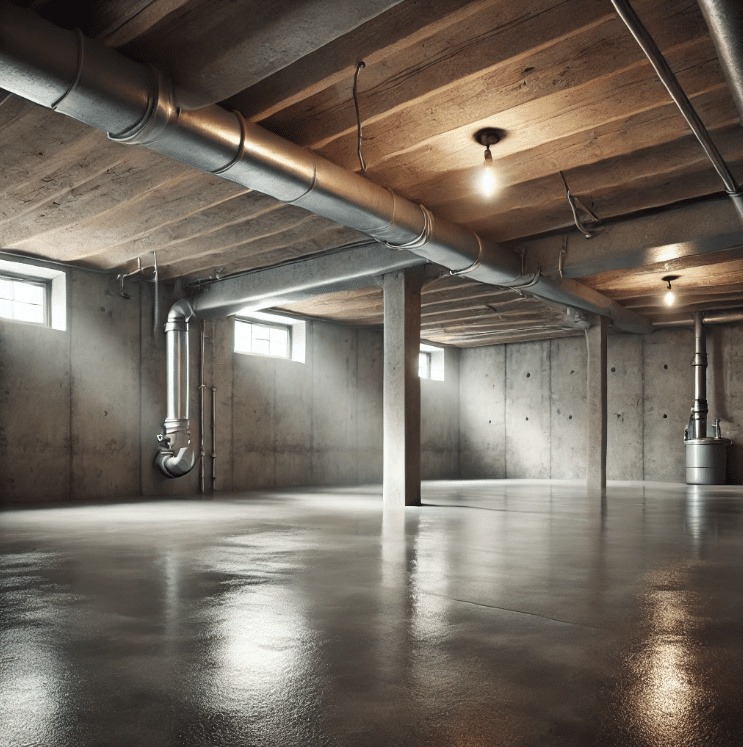
Investing in basement waterproofing can considerably boost your property’s value. This isn’t just speculation, it’s underpinned by solid real estate principles. A dry, useable basement adds functional square footage to your home, increasing its marketable value.
Think about it. Potential buyers don’t just see an extra room. They see a home office, a playroom, or a guest suite. This added flexibility can make your property stand out in a competitive market, appealing to a wider range of buyers.
Moreover, waterproofing your basement shows you’re a proactive homeowner, someone who maintains their property well. Buyers appreciate this. They’re looking for a home, not a project. A waterproofed basement removes the fear of potential water damage, mould, or structural issues.
It’s peace of mind that they won’t have to shell out for expensive repairs down the line.
In a nutshell, basement waterproofing increases perceived value, actual square footage, and buyer appeal. It’s an investment that not only enhances the quality of living in your home but also pays off when it’s time to sell.
Cost of Waterproofing Your Basement
While the price tag may vary, waterproofing your basement is a significant investment, but it’s essential to contemplate the long-term savings and added value it brings to your property.
The cost can depend on various factors, including the basement’s size, the severity of the water issue, and the method of waterproofing chosen.
To give you a ballpark figure, the national average for professional basement waterproofing ranges from $3,000 to $5,000. Yes, it’s a considerable sum, but remember, you’re investing in both your home’s sustainability and its resale value.
In some cases, you might need to address serious issues like foundation cracks, which can escalate the cost.
You could also choose to go for a less expensive, temporary solution like waterproof paint or sealants, but they’re not as effective or long-lasting as professional waterproofing.
Return on Investment Expectations
Despite the initially steep cost, waterproofing your basement can yield a significant return on investment (ROI). It’s not just about preventing water damage; it’s about adding value to your home.
To put it into perspective, consider that most waterproofing projects cost between $3,000 and $10,000, depending on the complexity of the job. Yet, the ROI can be as high as 30%, making it a good investment for homeowners.
The reasoning behind this is quite simple. A dry, usable basement can increase the livable square footage of your home, boosting its market value. Additionally, potential buyers often shy away from homes with damp or flooded basements, thereby decreasing the sale price. Consequently, a waterproofed basement not only adds value but also enhances your home’s marketability.
Furthermore, waterproofing your basement can save you money in the long run. It helps prevent costly repairs caused by water damage, such as mold remediation or structural fixes.
Case Studies: Real-life Examples
Homeowners’ success stories may offer the most compelling argument for basement waterproofing.
Let’s consider three real-life examples:
- The Smith Family: They’d frequent flooding issues in their basement. After waterproofing, they not only eliminated the flooding but also increased their home’s value by approximately 10%. They’re now enjoying an extra living space and peace of mind.
- The Johnsons: They were considering selling their home but were concerned about its low market value due to a damp basement. After waterproofing, their property value skyrocketed by 20%. In fact, they were pleasantly surprised when they sold their house above the asking price.
- The Browns: They waterproofed their basement as a preventive measure. This proactive approach paid off when a heavy rainstorm hit, causing flooding in their neighborhood. Their home remained safe and dry, preserving its value and attracting potential buyers.
These success stories show that basement waterproofing is more than just a home improvement project.
It’s an investment that not only preserves but can greatly increase your home’s value.
Frequently Asked Questions
What Materials Are Commonly Used in Basement Waterproofing?
Common materials you’ll use for basement waterproofing include concrete sealers, silicate-based sealers, waterproofing paint, and plastic sheets and panels. It’s important to choose the right one based on your basement’s specific conditions.
Does Waterproofing Affect the Basements Temperature or Humidity Levels?
Yes, waterproofing your basement can affect temperature and humidity levels. It helps to regulate indoor temperatures by preventing drafts and reduces humidity by stopping water intrusion, making your basement more comfortable and energy-efficient.
Can Waterproofing Help in Preventing Basement Mold and Mildew?
Absolutely, waterproofing your basement can effectively prevent mold and mildew growth. It eliminates excess moisture, a primary factor for mold development. So, you’re not just safeguarding your basement but also improving your home’s overall health condition.
What Are the Potential Health Risks of Not Waterproofing a Basement?
Not waterproofing your basement can lead to mold and mildew, which pose serious health risks. You’re exposing yourself to potential respiratory problems, allergies, and even toxic mold syndrome. It’s essential to maintain a dry, mold-free environment.
How Long Does the Waterproofing Process Typically Take?
The duration of the waterproofing process depends on your home’s specific needs. However, it generally takes 1-3 days. You’ll need to contemplate factors like the size of your basement and the severity of the moisture problem.
Conclusion
So, does waterproofing your basement increase your home’s value? Absolutely. Not only does it make your house more appealing to potential buyers, but it also offers a strong return on investment. You’re creating a space that’s versatile and free from concerns of water damage and mold. While the initial costs might seem high, it’s a smart, long-term investment in your property’s health and value. Waterproofing your basement is indeed a worthwhile endeavor.