
Ever dealt with a damp, musty basement? It’s a common issue homeowners face, and waterproof membranes may just be the solution you need. These barriers provide a robust defense against moisture, warding off potential mold growth and structural damage. They come in various forms, each with its own perks and installation methods. But how exactly do they work, and what makes them such a valuable investment? Stick around, and you’ll discover why waterproof membranes could be the unsung heroes of basement maintenance.
Key Takeaways
- Waterproof membranes function as barriers against moisture infiltration in basements, protecting structural integrity.
- Membranes can be liquid, sheet-based, or cementitious, each offering unique characteristics and installation requirements.
- Proper installation, involving surface preparation and precise application, ensures the effectiveness of waterproof membranes.
- Regular inspections and maintenance of the waterproof membrane are essential to prevent costly repairs and ensure longevity.
- Despite common misconceptions, waterproof membranes are cost-effective, suitable for various climates, and can be installed by homeowners with due care.
Understanding Basement Moisture Issues
Understanding basement moisture issues is key to maintaining a dry and safe home. It’s more than just a nuisance; it brings serious health and structural risks that you can’t afford to overlook.
You’ll typically notice moisture in your basement through visible signs like damp spots, mold growth, a musty smell, or even water pooling. These issues often stem from poor construction, inadequate ventilation, or a lack of proper drainage.
Rainwater and groundwater can seep into your basement through cracks in the walls, floors, or around windows. It’s also common for basements to suffer from condensation due to temperature differences between the inside and outside environments.
Inadequate ventilation traps moisture-laden air in your basement, allowing it to condense on cool surfaces. This can create a perfect breeding ground for mold and mildew, which pose health risks.
If you’re experiencing these issues, it’s important to take immediate action. Not only can moisture damage personal belongings stored in your basement, but it can also weaken your home’s foundation, risking structural integrity.
Understanding the source of your basement’s moisture issue is the first step. It’s crucial knowledge before moving on to solutions like waterproof membranes, which we’ll discuss in the next section.
Basics of Waterproof Membranes
Taking the first step towards a dry basement, you’ll want to familiarize yourself with waterproof membranes. These protective barriers are your basement’s best line of defense against moisture infiltration. Designed to prevent water from seeping into your basement, they’re an essential component of any effective basement waterproofing strategy.
Primarily, waterproof membranes work by creating an impenetrable barrier between your basement’s walls or floors and any external moisture. Whether it’s from rain, groundwater, or condensation, water can cause serious damage to your home structure, and that’s where waterproof membranes come in handy.
They’re typically installed on the exterior or interior of your basement’s walls and floors, providing a shield against water penetration.
Furthermore, these membranes generally have a long lifespan, making them a cost-effective solution to water issues. You’ll also enjoy the peace of mind that comes from knowing your home is protected from potential water damage.
However, the effectiveness of these membranes relies heavily on proper installation. It’s advisable to hire professionals with expertise in handling waterproof membranes to guarantee a thorough job.
Types of Waterproof Membranes
Now, let’s focus on the various types of waterproof membranes you can choose for your basement.
You’ll find the market offers options such as liquid waterproofing membranes, sheet-based membranes, and cementitious waterproofing methods.
Each type possesses unique characteristics and advantages, making it essential for you to understand their differences to make an informed choice.
Liquid Waterproofing Membranes
When it comes to waterproofing your basement, liquid waterproofing membranes prove to be an effective option. They’re a high-performance solution that forms a seamless barrier against moisture, providing thorough protection for your basement walls and floors.
You’ll find that liquid waterproofing membranes are typically comprised of a liquid rubber product. This substance is applied smoothly over the surface, filling any cracks or crevices present. As it dries, it hardens into a durable, flexible membrane that can stretch and contract with your home’s natural movements. It won’t crack or peel, guaranteeing long-lasting defense against moisture ingress.
One major advantage of these membranes is their ease of application. You can use a brush, roller, or spray equipment to apply them, which means you can cover large areas quickly and efficiently. They’re also perfect for irregular shapes or difficult-to-reach areas where other waterproofing methods may struggle.
However, it’s essential to recognize that application requires skill and care. You must guarantee a uniform thickness across the entire surface for peak protection. If not applied correctly, it may lead to failures in the membrane, compromising your basement’s waterproofing.
As a result, it’s often best to engage professionals to verify the job is done right.
Sheet-based Membranes
While liquid waterproofing membranes offer an effective solution, there’s another option to evaluate for basement waterproofing – sheet-based membranes. These membranes are pre-formed and come in rolls that you apply to your basement walls and floor. They’re typically made from rubber, plastic, or a bitumen compound, guaranteeing a sturdy defense against moisture.
You’ll appreciate that sheet-based membranes provide a continuous barrier without any joints, which can be a major advantage over liquid membranes that can develop weak points over time. The sheets are also resistant to a range of chemicals, minimizing the risk of degradation and guaranteeing a long lifespan for your waterproofing solution.
Installation is straightforward, though it does require precision. The sheets are rolled onto the surface and then bonded, either self-adhered with an adhesive backing or heat-welded on site.
You’ll want to guarantee that there are no gaps or bubbles, as these can compromise the membrane’s effectiveness.
Cementitious Waterproofing Methods
If you’re considering other waterproofing options for your basement, you should take a closer look at cementitious waterproofing methods. This type of waterproofing is a popular choice because it’s easy to apply and incredibly durable. It’s a mixture of cement, sand, a bonding agent, and water, that’s applied to the exterior of your basement walls to create a hard, waterproof barrier.
Here’s a quick comparison of different characteristics:
| Characteristic | Cementitious Waterproofing | Other Methods |
|---|---|---|
| Durability | High | Varies |
| Ease of Application | Easy | Varies |
| Cost | Moderate | Varies |
| Maintenance | Low | Varies |
Cementitious waterproofing doesn’t require a lot of maintenance once it’s applied, unlike other methods that may need regular checks and repairs. Plus, it’s resistant to the wear and tear that can happen over time in a basement environment.
However, you need to guarantee it’s applied correctly. A poor application can lead to cracks and leaks, which will defeat the purpose of the waterproofing. So, it’s vital to hire a professional or be very meticulous if you’re doing it yourself.
How Waterproof Membranes Work
You might wonder how waterproof membranes work to protect your basement from water damage.
It’s not complex: these membranes function as a physical barrier, preventing water from seeping through your basement’s walls and floor.
Before we discuss the precautions and installation process, it’s essential to understand this basic principle.
Functionality of Waterproof Membranes
In the domain of basement construction, the role waterproof membranes play is essential. They’re designed to stop water ingress, safeguarding your basement from unwanted dampness and potential damage.
But how do these membranes work?
Essentially, waterproof membranes act as barriers between your home’s foundation and the surrounding soil. When it rains, water saturates the soil around your home, creating hydrostatic pressure. This pressure can push water through cracks in your foundation, leading to leaks. Waterproof membranes help prevent this by deflecting water away from the basement walls.
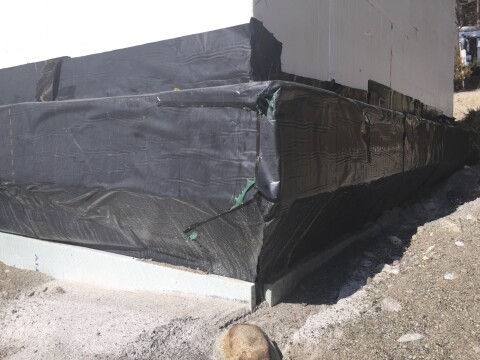
These membranes are typically made from a durable, waterproof material like rubber or plastic. They’re applied directly to the exterior walls of your basement, effectively sealing off your home’s foundation from moisture.
With the membrane in place, water that comes into contact with your basement walls is repelled, keeping your basement dry.
Installation Process and Precautions
Often, the installation process of waterproof membranes necessitates keen attention to detail and adherence to safety precautions. It’s not just a matter of slapping the membrane on. You need to prepare the surface, ensuring it’s clean and smooth. Cracks or uneven surfaces could interfere with the membrane’s ability to seal properly.
The membrane should be cut to the exact size of the area you’re waterproofing. You don’t want overlaps or gaps. Make sure you’re wearing the appropriate safety gear—gloves, goggles, and a mask—because some membranes have potent adhesive elements that can be harmful if inhaled or come into contact with skin.
Once the membrane is placed, it must be pressed firmly against the surface. This is typically done using a roller for larger areas, or a brush for smaller, more intricate spaces.
After installation, you’ll need to let the membrane cure. The curing process can take several hours to a few days, depending on the type of membrane used and the conditions in the basement.
As you can see, installing a waterproof membrane isn’t a casual DIY job. It requires precision, patience, and safety awareness. But when done correctly, the results are well worth it.
Benefits of Using Waterproof Membranes
Adopting waterproof membranes for your basement provides a multitude of benefits, key among them being the prevention of water damage. These membranes act as a barrier, stopping the ingress of water and moisture into your basement. Hence, they protect your basement’s structural integrity, keeping it safe and sound for the long haul.
But there’s more. Waterproof membranes also greatly reduce the risk of mold and mildew formation. These organisms thrive in moist environments and can lead to harmful health conditions when inhaled. By keeping your basement dry, you’re also promoting a healthier living environment for you and your family.
Another major benefit is the prevention of damp, musty smells often associated with wet basements. You’ll notice an immediate improvement in air quality when you install a waterproof membrane. This not only makes your basement more comfortable but also increases the value of your property.
Lastly, waterproof membranes provide excellent thermal insulation. This means, during those cold winter months, your basement will be warmer, reducing the need for additional heating, and ultimately saving on your energy bills.
Installation Process for Waterproof Membranes
Before you can reap the benefits of a waterproof membrane, you’ll need to correctly install it in your basement. The process may seem intimidating, but it’s not as complex as it might initially appear. Here’s a simplified step-by-step guide.
Firstly, you’ll need to prepare the surface. This includes cleaning the area thoroughly and repairing any existing damage. Then, apply a primer to the surface to guarantee that the membrane adheres properly. This primer should be applied evenly and allowed to dry completely.
Next, apply the waterproof membrane. Make sure it’s applied evenly and covers the entire area. Use a roller or brush to apply the membrane, ensuring no area is left uncovered.
Finally, allow the membrane to dry completely. Depending on the product, this could take anywhere from a few hours to a few days.
Here’s a brief summary:
| Step | Description | Duration |
|---|---|---|
| Surface Preparation | Clean and repair the area. Apply primer. | Varies |
| Membrane Application | Apply evenly, covering the entire area. | Varies |
| Drying | Allow the membrane to dry completely. | Few hours to days |
Maintaining Your Waterproof Membrane
Regular maintenance is an essential part of ensuring the longevity of your waterproof membrane. Over time, even the highest quality membranes can degrade, and without proper care, you could find yourself dealing with leaks, mold growth, and structural damage.
As a rule, you should inspect your waterproof membrane twice a year. Look for signs of wear and tear, such as cracks or blisters. If you spot any, consider hiring a professional to assess the situation and make necessary repairs.
Don’t try to repair it yourself; improper handling could void the warranty and potentially worsen the problem.
Aside from regular inspections, be proactive in preventing damage. Avoid storing sharp objects near the membrane and keep the surrounding area clean to prevent buildup of dirt and debris that can harm the membrane over time.
If your basement is prone to flooding, invest in a sump pump to remove excessive moisture quickly.
Frequently Asked Questions
What Is the Average Lifespan of a Waterproof Membrane in a Basement?
You’re typically looking at a lifespan of 25 to 50 years for a basement’s waterproof membrane. However, it’s essential to remember that lifespan can vary based on product quality and installation. Regular inspections can extend it.
Can Waterproof Membranes Also Protect Against Radon Gas?
Yes, they can. Waterproof membranes don’t just shield your basement from moisture. They’re also a valued ally in the battle against radon, helping to minimize this invisible enemy’s unwanted advances into your home’s safe haven.
How Does Temperature Affect the Effectiveness of Waterproof Membranes?
Extreme temperatures can affect your waterproof membrane’s effectiveness. In freezing conditions, it may become brittle and crack. Conversely, high heat can cause it to soften and lose its shape, reducing its waterproofing capabilities.
Are Waterproof Membranes Safe to Use Around Children and Pets?
Yes, they’re safe. You’ll find most waterproof membranes aren’t toxic to kids or pets. Still, supervise when they’re around during installation to prevent any accidental ingestion or contact with eyes and skin.
Can I Install a Waterproof Membrane Myself, or Should I Hire a Professional?
Sure, you can install a waterproof membrane yourself, but it’s tricky. If you’re not experienced, hiring a professional is safer. They’ll guarantee a proper seal, giving you the best defense against moisture.
Conclusion
You’ve now armed yourself with crucial knowledge about waterproof membranes, the unsung heroes of basement protection. Trust me, this investment is worth its weight in gold. It’ll shield your basement from menacing moisture, keeping mold at bay and preserving your property’s value. So, don’t delay! Add an extra layer of defense to your basement today. It’s an essential part of maintaining a healthy, happy home.

Rob VanSuilichem
Serving Michigan homeowners for over 32 years, Everdry is one of the Nation’s largest and most experienced waterproofer.
Locally owned, operated and staffed, Everdry professionals take a personal one-on-one approach in educating homeowners so they truly understand all their options for creating a safe, dry, healthy and usable space in their basements.
What Sets Us Apart
- Unbeatable quality due to the experience of the owners and staff.
- Unbeatable value due to the efficiency and expertise of more than 32 years of experience.
- Unbeatable value due to the purchasing power of being one of the largest waterproofers in the nation.
- Unbeatable service due to the fact that EverDry is a locally owned and operated company.
Credentials Include:
- Members of the Home Builders Association
- H.U.D. evaluated
- I.C.C. evaluated (Report #94-07)
- Better Business Bureau Accredited with the Eastern and Western Michigan BBB
- Fully Licensed and Insured
The aforementioned memberships are important because we benefit from the constant exchange of information and knowledge. We are updated on everything from installation techniques, to customer service improvements. You benefit in the knowledge that these third party inspection agencies require us to meet stringent requirements to remain members in good standing.
Better Business Bureau
We have been nominated and won the prestigious Better Business Bureau’s Torch Award for Ethics many times, Chosen as a W.Mich.BBB Torch finalist in 2014 & 2015, Won the Torch Award for Ethics in 2016, Won the Eastern Michigan BBB Torch Award in 2019 and was also chosen as a Western Michigan BBB Torch finalist in 2019. Won the Eastern Michigan BBB Torch Award in 2023 and Finalist for the Western Michigan BBB Torch Award in 2020 & 2021!
Mission Statement
To create raving fans of our customers and employees through frequent contact, constant training, a commitment to excellence and unlimited opportunity.
