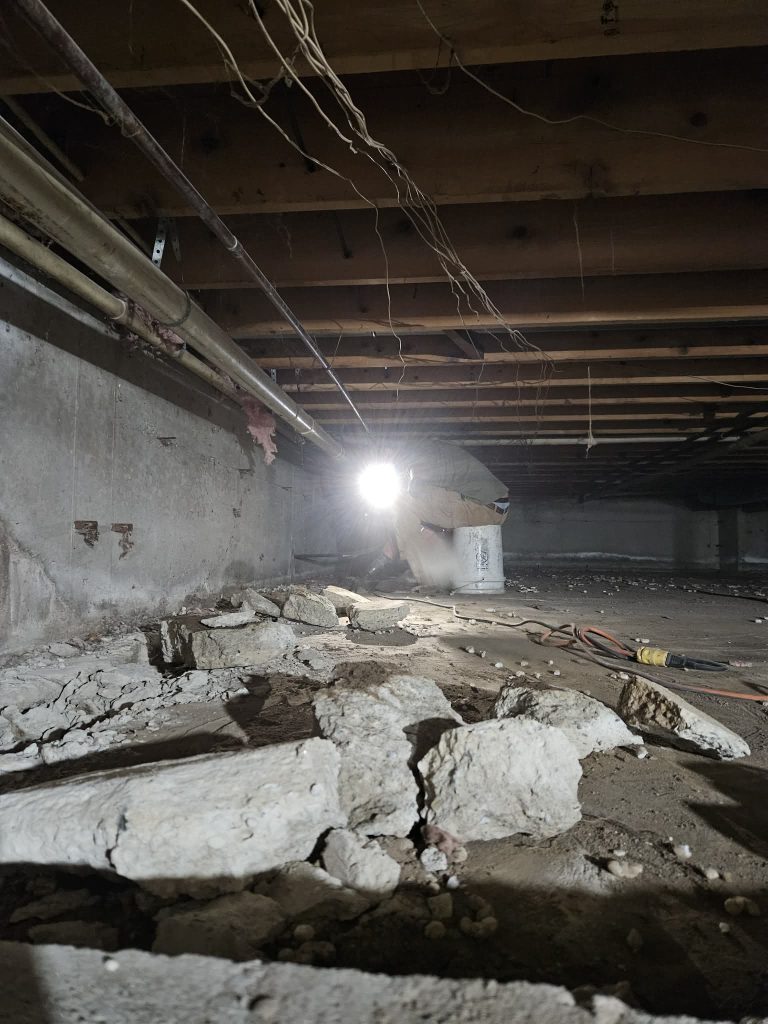
Crawlspaces are often ignored because they are not part of daily living space. They are dark, rarely accessed, and easy to forget.
But in Saginaw and throughout Michigan, unsealed crawlspaces are one of the most common sources of hidden structural damage.
Moisture from soil, seasonal humidity changes, and groundwater pressure create an environment that slowly weakens the framing that supports your home. The damage rarely happens overnight. Instead, it develops gradually, often going unnoticed until floors begin to sag or odors begin to rise.
Understanding how crawlspace moisture affects structural components is critical. Crawlspace waterproofing in Saginaw is not just about comfort. It is about preserving the structural integrity of your entire home.
Why Michigan Crawlspaces Are Highly Vulnerable
Michigan’s climate creates ideal conditions for crawlspace moisture problems.
Key contributing factors include:
Clay-heavy soils that retain water
Spring snowmelt saturating ground
Humid summer air entering vents
Freeze-thaw cycles affecting soil density
Limited natural ventilation
When soil beneath a crawlspace remains damp, moisture evaporates upward. If the crawlspace is not sealed, this moisture accumulates beneath the home.
Over time, persistent humidity becomes a structural concern.
Wood Rot: The Silent Structural Threat
Most crawlspaces contain wooden structural components, including:
Floor joists
Support beams
Subflooring
Rim joists
When exposed to prolonged moisture, wood begins to deteriorate. Wood rot fungi thrive in environments where moisture levels remain elevated.
Early stages of rot may not be visible from above. However, signs may eventually include:
Soft or spongy floor sections
Uneven floor surfaces
Increased floor vibration
Visible cracking in wood framing
Once wood rot progresses, structural reinforcement or replacement may be required.
Preventive crawlspace waterproofing Saginaw homeowners invest in can stop moisture before it reaches damaging levels.
Sagging Floors and Structural Shifting
One of the most noticeable symptoms of crawlspace damage is sagging flooring.
When floor joists absorb moisture repeatedly, they weaken and may begin to bend. Over time, this can result in:
Sloping floors
Gaps between walls and flooring
Doors that stick or misalign
Interior drywall cracking
Homeowners sometimes mistake these symptoms for normal settling. In many cases, however, crawlspace moisture is the underlying cause.
Correcting the problem requires both structural stabilization and moisture control.
The Role of Mold in Structural Deterioration
Mold does more than affect air quality. It also contributes to material breakdown.
Crawlspaces often contain organic materials such as wood and insulation. When humidity levels rise, mold spores multiply rapidly.
Mold growth can:
Because crawlspaces are enclosed, mold may spread extensively before being discovered.
Professional crawlspace repair includes moisture mitigation and mold prevention strategies.
Corrosion of Metal Components
Not all crawlspace damage is related to wood.
Metal components such as:
Support brackets
Fasteners
HVAC ductwork
Plumbing connections
are also vulnerable to high humidity.
Excess moisture can accelerate corrosion, weakening structural connections and mechanical systems.
In colder months, condensation on metal surfaces further increases deterioration.
Maintaining a dry crawlspace protects both structural and mechanical systems.
Pest Infestations Thrive in Damp Environments
Unsealed crawlspaces attract pests.
Rodents, insects, and termites are drawn to moisture-rich environments. Damp wood and insulation create ideal nesting conditions.
Termites, in particular, can cause significant structural damage when moisture softens wooden framing.
By sealing and encapsulating the crawlspace, homeowners reduce both moisture and pest attraction.
Crawlspace encapsulation benefits extend beyond water control to overall structural preservation.
Why Traditional Venting Fails in Michigan
Older crawlspace designs relied on vents to promote airflow. However, in Michigan’s humid summers, venting often worsens moisture problems.
When warm, humid air enters a cooler crawlspace, condensation forms on structural components.
In winter, vents allow cold air to freeze pipes and increase energy loss.
Modern building science shows that sealed and conditioned crawlspaces perform better in climates with seasonal humidity swings.
Encapsulation eliminates uncontrolled airflow and stabilizes internal conditions.
How Crawlspace Encapsulation Protects Structural Integrity
Professional crawlspace encapsulation involves more than laying plastic on the ground.
A comprehensive system typically includes:
Heavy-duty vapor barrier installation
Sealing vents and penetrations
Addressing drainage issues
Insulating crawlspace walls
Installing dehumidification systems when necessary
By sealing the crawlspace from outside moisture and regulating humidity, encapsulation protects framing materials year-round.
Moisture levels remain stable, reducing risk of rot, mold, and corrosion.
The Financial Impact of Ignoring Crawlspace Damage
Hidden structural damage can become expensive quickly.
Potential costs include:
These repairs often require significant labor and disruption.
Preventive crawlspace waterproofing in Saginaw is typically far more cost-effective than repairing advanced damage.
When to Schedule a Crawlspace Inspection
You should consider professional evaluation if you notice:
Uneven floors
Musty odors inside the home
Increased indoor humidity
Insulation hanging beneath the floor
Pest activity
Visible moisture beneath the home
Even if symptoms appear minor, early inspection identifies risk factors before structural integrity is compromised.
Professional assessment ensures the appropriate combination of waterproofing, encapsulation, and structural repair is applied.
Frequently Asked Questions
Can crawlspace moisture really cause structural damage?
Yes. Prolonged exposure to humidity can weaken wood framing and structural supports.
Is encapsulation necessary if there is no standing water?
Yes. Moisture vapor alone can cause damage over time.
How long does crawlspace encapsulation last?
High-quality systems can last decades with proper maintenance.
Will encapsulation reduce energy costs?
Yes. Sealing the crawlspace reduces air infiltration and improves temperature stability.
Is structural damage reversible?
Early-stage issues can often be repaired, but severe damage may require replacement of affected components.
Conclusion: Protect the Structure Beneath Your Feet
Crawlspaces may be hidden, but their impact on your home’s structure is significant.
In Saginaw, moisture conditions create ongoing risk for wood rot, mold growth, corrosion, and sagging floors. Left untreated, these issues compromise structural integrity and increase repair costs.
Professional crawlspace waterproofing and encapsulation provide long-term protection by controlling humidity and sealing out ground moisture.
If you have not inspected your crawlspace recently, now is the time. Addressing hidden moisture today protects the stability, safety, and value of your home for years to come.