
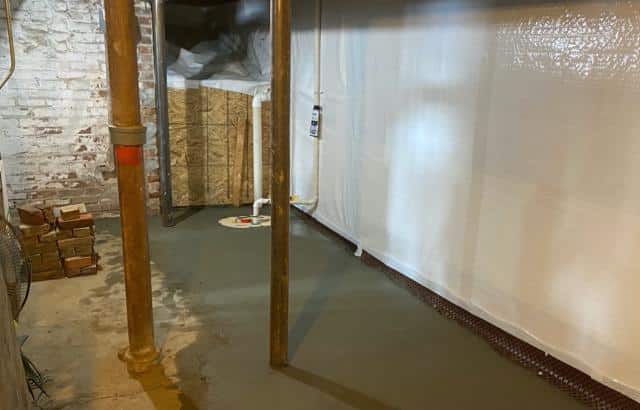
Dealing with wet basement walls can be quite a headache, can’t it? You might think it’s an impossible task, but don’t worry, it’s not. There are actually seven proven solutions that can make a significant difference. From waterproof paints and sealants over effective drainage systems and sump pumps to dehumidifiers, insulation, and vapor barriers. Each solution has its unique benefits and application methods, which must be understood to maximize their effectiveness. Let’s explore them together, shall we? You will definitely benefit from knowing more about these strategies to keep your basement dry and mold-free.
Key Takeaways
- Apply waterproof paint or sealants to walls to form an impermeable barrier against moisture.
- Install drainage systems like French drains or trench drains to divert water away from the structure.
- Use sump pumps to remove accumulated water; maintain pumps regularly for optimal functioning.
- Control humidity levels with dehumidifiers and ensure proper ventilation to reduce moisture buildup.
- Install insulation and vapor barriers effectively to provide additional protection against moisture.
Understanding Basement Wall Moisture
Ever wonder why your basement walls are always damp? The primary culprit is moisture sources. They can be external, like rainwater seeping in, or internal, such as condensation from humid air. This moisture can cause a host of problems, including mold growth, structural decay, and unwelcome odors.
Now, you’re probably thinking, “How do I stop this?” Wall treatments are your first line of defense. These can range from waterproof paint to full-blown drainage systems. Waterproof paint is a cost-effective solution that’s relatively easy to apply. It creates an impermeable barrier that prevents moisture from seeping through your walls.
However, if you’re dealing with a significant moisture problem, you might need something more robust. That’s where drainage systems come in. These are designed to collect and channel water away from your basement walls. They’re a bit more involved and can be pricey, but they’re also incredibly effective.
Utilizing Dehumidifiers Effectively
Experiencing persistent dampness in your basement? It’s time you considered utilizing dehumidifiers effectively.
These devices work to decrease humidity levels, making your basement less hospitable to allergens such as dust mites, mold, and mildew.
To maximize a dehumidifier’s efficiency, it’s essential to understand the basics of dehumidifier maintenance and humidity control.
Here are some points to guide you:
- Always position your dehumidifier away from walls and furniture for optimal air circulation.
- Regularly clean and replace the filter to ensure the unit’s efficiency.
- Use a hygrometer to monitor humidity levels and adjust your dehumidifier settings accordingly.
- Don’t forget to empty the water collection bucket regularly to prevent overflow and potential water damage.
Importance of Proper Ventilation
While using dehumidifiers can effectively reduce humidity in your basement, it’s not the only strategy. Proper ventilation plays a significant role in managing basement moisture.
Understanding the importance of ventilation types and their role in humidity control can make a huge difference in maintaining your basement’s health.
Ventilation helps to circulate air and reduce moisture buildup, which is a critical factor in preventing wet basement walls. There are numerous ventilation types, and each serves a unique purpose.
Natural ventilation relies on windows and vents allowing fresh air to circulate. Mechanical ventilation, on the other hand, uses devices like exhaust fans to force out stale, damp air.
You can’t underestimate the importance of proper ventilation in your basement. It assists in maintaining an optimal environment by controlling humidity levels and preventing the growth of mold and mildew.
Besides, it helps in eliminating musty odors, contributing to a healthier and more comfortable basement.
Exploring Waterproofing Solutions
Now, let’s move on to exploring waterproofing solutions for your wet basement walls.
You’ll need to understand the basics of basement waterproofing, select the appropriate waterproofing materials, and implement effective waterproofing techniques.
This process will ensure the longevity of your basement, keeping it dry and damage-free.
Understanding Basement Waterproofing
Before delving into the actual solutions for wet basement walls, it’s crucial to fully understand the concept of basement waterproofing. This process is more than just a quick fix; it’s a long-term investment in maintaining the integrity of your home.
By controlling basement humidity and providing effective moisture control, you can prevent damage and create a healthier living environment.
Basement waterproofing involves several key components:
- A drainage system to redirect water away from your home
- Waterproof materials applied to your basement walls and floor to resist water penetration
- A dehumidifier to control basement humidity and prevent condensation
- Regular maintenance and inspections to ensure the effectiveness of your waterproofing system
Understanding these aspects will help you make informed decisions about your waterproofing project.
Remember, every home is unique, so what works for one mightn’t work for another. Your local climate, basement’s condition, and your budget are all factors that can determine the best solution for you.
Waterproofing isn’t just about solving a problem; it’s about preventive maintenance. It’s an investment in your home’s future, and a proactive way to ensure your basement remains dry, safe, and comfortable.
Selecting Waterproofing Materials
In the realm of basement waterproofing, choosing the right materials is crucial. You need to select the products that will provide the most effective moisture barriers and foundation repair. Waterproofing membranes, sealant options, drainage mats, exterior coatings, interior finishes, and waterproofing additives are all available to you.
Here’s a table that outlines the key features, uses, and benefits of each type:
| Material Type | Key Features | Advantages |
|---|---|---|
| Waterproofing Membranes | Thin, flexible sheets | Effective against water seepage |
| Sealant Options | Diverse range (acrylic, silicone, etc.) | Versatile; can be used on various surfaces |
| Drainage Mats | High water flow design | Reduces hydrostatic pressure |
| Exterior Coatings | Weather-resistant | Protects the foundation from the outside |
| Interior Finishes | Moisture-resistant paint or sealants | Offers an extra layer of protection inside |
Your choice will depend on your basement’s specific needs and your budget. If you’re unsure, consult a professional for advice. Remember, the goal is to create a dry, usable space. So, choose wisely to avoid future problems.
Implementing Waterproofing Techniques
Every successful basement waterproofing project relies on a blend of the right materials and the correct application techniques.
It’s not enough to just have the best waterproofing materials; you need to know how to use them effectively.
Let’s explore how you can implement waterproofing techniques to keep your basement dry.
Here are some key steps:
- Exterior Drainage: Ensure that water is directed away from your home. By improving your exterior drainage, you’ll minimize the amount of water that reaches your basement walls.
- Foundation Repairs: Waterproofing won’t be effective if your foundation is compromised. Make sure any cracks or weaknesses in the foundation are addressed before starting the waterproofing process.
- Applying Sealants: Apply a high-quality waterproofing sealant to your basement walls. This will create a barrier that prevents water from seeping through.
- Installing a Sump Pump: If water does find its way into your basement, a sump pump can help remove it before it causes damage.
The Role of Sump Pumps
Let’s now turn our attention to sump pumps and their pivotal role in combating wet basement walls.
You’ll learn what sump pumps are, how they work, and why they’re a crucial part of any comprehensive basement waterproofing strategy.
Then, we’ll guide you through the process of sump pump installation, ensuring you’re well-equipped to tackle this task confidently.
Understanding Sump Pumps
Sump pumps play a vital role in keeping your basement dry and damage-free. They work by pumping out water that has collected in a sump basin, usually installed at the lowest point in your basement.
Understanding how sump pumps operate and their types can help you maintain a dry, damage-free basement.
There are two main sump pump types:
- Submersible sump pumps: These are installed in a sump pit and are sealed to prevent electrical short circuits. They’re typically quieter and have a longer lifespan.
- Pedestal sump pumps: These are mounted above the sump pit and are easier to service because they’re more accessible. They tend to be noisier but are usually less expensive.
Regular sump pump maintenance is essential to ensure they function optimally when needed. This includes:
- Checking for debris in the sump basin
- Testing the pump by pouring a bucket of water into the sump pit
- Inspecting the outlet pipes and ensuring they’re draining water away from your home
- Making sure the pump is standing upright
Understanding sump pumps is the first step towards ensuring a dry, safe basement.
Sump Pumps Installation Guide
Installing a sump pump can be a game-changer in maintaining a dry basement, especially in areas prone to heavy rainfall or flooding. Every homeowner should be aware of the different sump pump types and how each one is installed.
Understanding your needs and the specific conditions of your basement will guide you in choosing the right type. Pedestal sump pumps are suitable for small basins as they’re compact, while submersible pumps, although more expensive, are quieter and can handle larger volumes of water.
| Sump Pump Type | Installation Complexity |
|---|---|
| Pedestal | Easy |
| Submersible | Moderate |
Remember that after installation, sump pump maintenance is crucial. Regular checks ensure the pump’s efficiency and longevity. This involves simple tasks such as cleaning the pump, inspecting for any damages, and testing the pump by pouring a bucket of water into the pit to make sure it’s working.
Drainage Systems: An Overview
Dealing with dampness in your basement can be a daunting task, but understanding drainage systems can be a vital first step towards finding a solution.
These systems, designed to direct water away from your home, are essential for preventing wet basements and potential damage to your home’s structure.
There are several types of drainage systems you can consider:
- French drains are installed in the ground and use gravel-filled trenches to divert water away from your home.
- Surface grading is a landscaping solution that involves altering the slope of your yard to facilitate water diversion.
- Trench drains are ideal for collecting and redirecting surface water, especially in areas that are prone to flooding.
- Drainage tiles, also known as weeping tiles, are used to remove unwanted water that has entered your basement.
Moreover, retaining walls can be built to hold back soil in hilly landscapes and work hand-in-hand with landscape grading to ensure water flows away from your home.
Regular drainage maintenance is crucial to keep these systems working effectively, preventing unnecessary future costs and damage.
Understanding these systems is the key to keeping your basement dry.
Insulation and Vapor Barriers
When it comes to keeping your basement dry, insulation and vapor barriers play a critical role. They’re designed to prevent thermal bridging and reduce moisture retention. Adequate insulation helps maintain a steady temperature, reducing the risk of condensation. Vapor barriers, on the other hand, prevent dampness from seeping into your basement.
Choosing the right insulation and vapor barrier can be tricky, so here’s a simple guide:
| Insulation Type | Ideal For |
|---|---|
| Spray Foam | Areas prone to dampness |
| Fiberglass | Moderately dry basements |
| Mineral Wool | Temperature fluctuations |
| Cellulose | Eco-conscious homeowners |
| Vapor Barrier Type | Ideal For |
|---|---|
| Sheet Plastic | Basic, economical protection |
| Liquid-applied | Irregular surfaces |
| Membrane Systems | Professional-level moisture control |
| Insulated Panels | Combination of insulation and barrier |
Remember, it’s not just about choosing the right materials, but also proper installation. Insulation should be snug, not compressed, to avoid thermal bridging. Vapor barriers must cover all surfaces, including walls, floors, and ceilings.
Don’t overlook the importance of insulation and vapor barriers in your fight against wet basement walls. They’re essential for maintaining a dry, comfortable basement.
Frequently Asked Questions
What Are the Health Risks Associated With a Wet Basement?
You’re at risk for several health issues with a wet basement.
The dampness encourages mold growth, which could lead to respiratory problems like asthma, allergies, and infections. It also deteriorates air quality, contributing to headaches, fatigue, and other symptoms.
Long-term exposure could even lead to serious conditions like pneumonia.
How Much Does It Typically Cost to Repair Wet Basement Walls?
Determining the cost to repair wet basement walls isn’t straightforward.
It depends on several factors like the extent of damage, repair options chosen, and your location. You could spend a few hundred to several thousand dollars.
It’s crucial you get multiple quotes and understand the process.
Don’t forget, while it’s an investment, you’re improving your home’s value and eliminating potential health risks.
It’s not just about repair but also about prevention.
Can a Wet Basement Affect the Overall Structure of the House?
Yes, a wet basement can indeed affect the overall structure of your house.
Continuous exposure to moisture can harm the structural integrity of your home. It weakens the foundation, leading to cracks and instability.
Moisture damage also encourages the growth of mold and mildew, which can degrade building materials further.
How Long Does It Typically Take to Dry Out a Wet Basement?
You’re probably wondering how long it takes to dry out a wet basement.
It’s not a quick fix, but using the right drying techniques can speed up the process. Generally, it’ll take about a week to fully dry, but it can vary depending on the severity of the moisture problem.
Remember, after drying, you’ll need to implement moisture control methods to prevent future issues.
It’s important to be patient and thorough to ensure a dry, safe basement.
Are There Any DIY Solutions to Deal With Wet Basement Walls?
Yes, there are several DIY solutions you can implement to tackle wet basement walls.
You can use waterproofing techniques like applying a waterproofing paint or installing a sump pump.
Additionally, ensure proper ventilation to prevent mold growth.
But remember, these are temporary fixes.
If you’re dealing with persistent dampness, it’s worth bringing in a professional to assess and resolve the issue.
Conclusion
In conclusion, you’ve got a range of proven solutions for your wet basement walls. Seal them with waterproof paint, use French drains or weeping tiles for effective drainage, and employ sump pumps for efficient water removal. Don’t forget the importance of air circulation, using dehumidifiers and proper ventilation. Insulate your walls appropriately and consider the use of vapor barriers for extra protection. With these steps, you’ll have a dry, comfortable basement in no time.

Rob VanSuilichem
Serving Michigan homeowners for over 32 years, Everdry is one of the Nation’s largest and most experienced waterproofer.
Locally owned, operated and staffed, Everdry professionals take a personal one-on-one approach in educating homeowners so they truly understand all their options for creating a safe, dry, healthy and usable space in their basements.
What Sets Us Apart
- Unbeatable quality due to the experience of the owners and staff.
- Unbeatable value due to the efficiency and expertise of more than 32 years of experience.
- Unbeatable value due to the purchasing power of being one of the largest waterproofers in the nation.
- Unbeatable service due to the fact that EverDry is a locally owned and operated company.
Credentials Include:
- Members of the Home Builders Association
- H.U.D. evaluated
- I.C.C. evaluated (Report #94-07)
- Better Business Bureau Accredited with the Eastern and Western Michigan BBB
- Fully Licensed and Insured
The aforementioned memberships are important because we benefit from the constant exchange of information and knowledge. We are updated on everything from installation techniques, to customer service improvements. You benefit in the knowledge that these third party inspection agencies require us to meet stringent requirements to remain members in good standing.
Better Business Bureau
We have been nominated and won the prestigious Better Business Bureau’s Torch Award for Ethics many times, Chosen as a W.Mich.BBB Torch finalist in 2014 & 2015, Won the Torch Award for Ethics in 2016, Won the Eastern Michigan BBB Torch Award in 2019 and was also chosen as a Western Michigan BBB Torch finalist in 2019. Won the Eastern Michigan BBB Torch Award in 2023 and Finalist for the Western Michigan BBB Torch Award in 2020 & 2021!
Mission Statement
To create raving fans of our customers and employees through frequent contact, constant training, a commitment to excellence and unlimited opportunity.
